
Credit Card Identity Fraud Rises 8% in Canada as Ages 56–65 Become a Key Target
Canadians aged 56 to 65 are becoming an important target for identity thieves, as longer credit histories and higher credit limits can make stolen personal information more valuable.
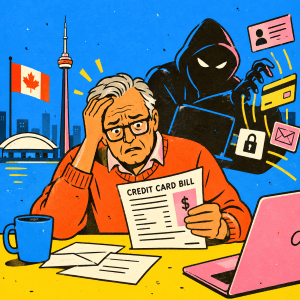
Credit card application fraud is rising in Canada, and Canadians between the ages of 56 and 65 are becoming an important target for identity thieves.
According to Equifax Canada’s latest Market Pulse Fraud Trends and Insights report, credit card application fraud increased 8% over the past year, driven largely by third-party identity theft.
Equifax found that consumers aged 56 to 65 are particularly attractive targets. The reason is not necessarily that they are easier to deceive. Instead, people in this age group often have longer credit histories, more established accounts and higher credit limits.
For identity thieves, that can make stolen personal information more valuable.
Why Are Canadians Aged 56 to 65 Being Targeted?
Carl Davies, Head of Fraud and Identity at Equifax Canada, said fraudsters are increasingly looking for consumers with mature and well-established credit profiles.
Many Canadians in their late 50s and early 60s have held credit cards, mortgages and other loans for years. Their credit profiles may be more established, and their available credit limits may also be higher than those of younger consumers.
Davies said:
Equifax also found that people in this age group may not check their credit reports as frequently as younger consumers.
That can give fraudsters more time. If someone has used a victim’s identity to apply for a new credit card or loan, the fraudulent activity may remain unnoticed for an extended period.
By the time the victim discovers an unfamiliar account or inquiry, the fraud may already have been underway for some time.
Third-Party Identity Theft Is Driving More Credit Card Fraud
One of the main factors behind the increase in credit card application fraud is third-party identity theft.
In simple terms, this happens when a fraudster obtains a real consumer’s personal information and then impersonates that person to apply for new financial products.
The stolen information can be used to apply for credit cards, loans, government benefits or other services that require identity verification.
Scams remain one of the most common ways criminals obtain personal information, particularly from older consumers.
Common tactics include phishing emails, fraudulent text messages known as smishing, and phone scams known as vishing, where criminals impersonate banks, government agencies or other trusted organizations.
Personal information can also be exposed through data breaches and other forms of cybercrime, including names, addresses, dates of birth and account information.
One of the Simplest Defences: Check Your Credit Report Regularly
Davies recommends that one of the most effective ways to limit the damage from identity theft is to:
If you find an account, loan or credit inquiry that you do not recognize, contact the relevant financial institution and credit bureau as soon as possible so the activity can be investigated.
The federal government also recommends reviewing credit reports for several types of irregularities, including incorrect personal information such as an unfamiliar address or incorrect date of birth, credit cards or loans that do not belong to you, inaccurate payment histories and accounts that you never opened.
Consumers should also review whether negative information has remained on their credit report beyond the normal reporting period and raise questions when something appears incorrect.
Ontario Residents Can Check Their Credit Reports for Free Every Month
Ontario residents do not need to wait until they suspect fraud before reviewing their credit information.
Consumers can currently obtain free monthly credit reports from Equifax and TransUnion and check for unfamiliar accounts, new credit inquiries or unexpected changes to their personal information.
Ontario also recommends reducing opportunities for personal information to be stolen in everyday life.
Financial documents should not be left sitting in a mailbox for long periods. When travelling, residents can ask someone they trust to collect their mail or use Canada Post’s mail-hold service.
Important documents such as passports and birth certificates should be stored securely. Old credit card offers, financial documents and other records containing names, addresses or account information should be properly shredded before disposal.
Information Shared on Social Media Can Also Be Used by Fraudsters
Identity theft does not always begin with a bank account.
Many people publicly share birthdays, family details, workplaces, travel plans and even location information on social media. Individually, these details may appear harmless, but together they can help criminals answer identity-verification questions or create more convincing scams.
Limiting the amount of personal information shared publicly and being cautious about unexpected emails, texts and phone calls are therefore important parts of protecting your identity.
If a bank, government agency or company unexpectedly asks for a SIN, bank card number, verification code or account password, consumers should verify the request through an official channel rather than replying directly or clicking a link.
Strong Passwords and Multi-Factor Authentication Still Matter
As more financial services move online, protecting paper documents alone is no longer enough.
Different accounts should use different strong passwords, and multi-factor authentication should be enabled whenever available. Phones, computers and tablets should also be kept up to date to reduce the risk of malware stealing login information.
Before registering for a new financial service, investment platform or website that requires identity documents, consumers should also verify the company and make sure they are using its legitimate website.
One of the biggest risks with identity theft is that victims may not realize their information has been used until much later.
For Canadians aged 56 to 65 with established credit histories and higher available credit, good credit can also make their identity more attractive to fraudsters.