
After welcoming their first child, Sue and Tony began thinking...
Read MoreCanada GST Increase to 7%? Rising Defense Spending Could Reshape Taxes
Defense Spending Surge Is Reshaping Canada’s Fiscal Outlook
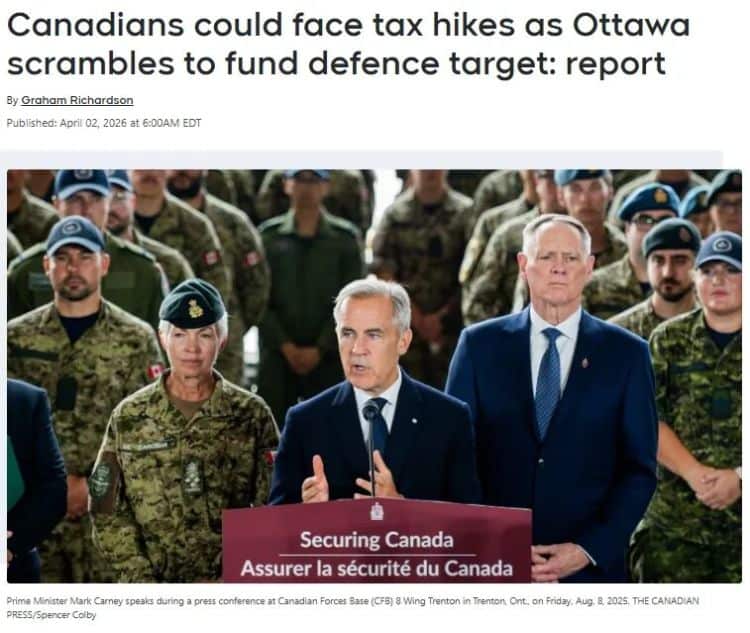
Canada is facing a significant fiscal challenge as defense spending is set to rise sharply over the next decade. According to a recent report from the C.D. Howe Institute, the federal government may need major policy adjustments to meet its commitment of raising defense spending to 5% of GDP by 2035.
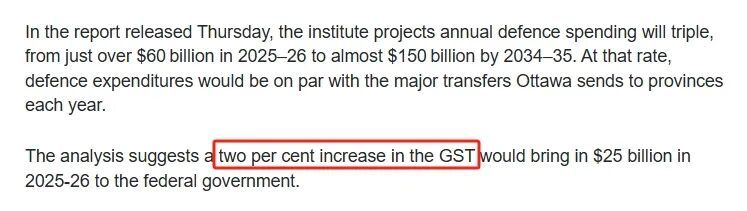
Defense spending is projected to increase from just over CAD 60 billion in 2025–2026 to nearly CAD 150 billion by 2034–2035, representing a near tripling. At that level, defense expenditures would be comparable to major federal transfers to provinces, such as healthcare funding.
While Canada has already reached NATO’s 2% target ahead of schedule, the move toward a 5% target significantly increases fiscal pressure.
Canada GST Increase Emerges as a Key Option
To finance this expansion, the report outlines a mix of tax increases and spending controls. One of the most notable proposals is a Canada GST increase from 5% to 7%.
Such a move could generate approximately CAD 25 billion annually in additional revenue. The report suggests that increasing consumption taxes may be less harmful to economic growth compared to raising income or savings taxes.
In addition to tax changes, the report recommends slowing the growth of federal transfers to provinces and tightening spending across non-defense programs, including social services.
Limited Room for Borrowing Amid Structural Pressures
Some may question whether the government could simply rely on borrowing. However, the report cautions against this approach.
Canada’s fiscal flexibility is constrained by several structural challenges: high public debt, weak productivity growth, slow economic expansion, and an aging population. These factors limit the government’s ability to fund rising defense costs through debt without increasing long-term fiscal risks.
The report argues that since current generations benefit most from defense spending, the cost should not be shifted excessively onto future taxpayers.
Impact on Households: Higher Costs in Everyday Spending
A Canada GST increase may appear modest, but its impact would be widely felt. A two-percentage-point increase means consumers would pay an additional CAD 2 in tax for every CAD 100 spent.
This affects everything from daily purchases to major expenses such as vehicles and home renovations. For middle-income households already facing high living costs, the added tax burden could further strain finances.
Even with efforts to spread spending cuts across multiple areas, the overall cost will ultimately fall on taxpayers.
You may also interested in
Ms. W’s Case Study: From Retirement Worries to Building a Family Legacy | AiF Clients
Ms. W, a healthcare therapist in her 60s, spent years...
Read MoreMr. M’s Story: From Starting Over in Canada to Rebuilding his Career and Financial Future | AiF Clients

Discover how an immigrant had to leave behind his successful...
Read MorePenny’s Case Study: When AI Created Uncertainty, Investing Created Confidence| AiF Clients

Discover how uncertainty can create confidence over time through Penny's...
Read MoreFrom Business Challenges to Investment Confidence: Susan’s Story| AiF Clients
Susan's story demonstrates how diversifying beyond a single source of...
Read More