
York Region Home Prices Fall 7.1% as North York Luxury Home Loses $1.11 Million in Nine Years
York Region home prices continued to decline in July 2026, while a North York luxury home recently sold for $1.11 million less than its 2017 purchase price, challenging the idea that Canadian real estate always appreciates over the long term.
The Greater Toronto Area real estate market remains under adjustment.
On one side, York Region home prices continued to decline year over year, with the average selling price falling to approximately $1.15 million in July 2026. On the other, a detached luxury home in North York recently sold for $1.11 million less than it did in 2017.
York Region Average Price Falls to $1.15 Million
According to Toronto Regional Real Estate Board (TRREB) data, the average residential selling price in York Region was approximately $1.15 million in July 2026.
That was down 2% from June, representing a one-month decline of $23,651. Compared with July 2025, prices were down 7.1%, or $88,257.
York Region recorded 1,063 residential sales during the month, up 1.3% year over year, with properties spending an average of 34 days on the market. There were 5,179 active listings at the end of July, down 11.8% from a year earlier.
Performance varied by housing type, but prices were generally lower than a year ago.
Detached homes sold for an average of approximately $1.43 million, down 4.2% from June and 8.8% year over year. That represents a decline of $136,868 in one year.
Semi-detached homes averaged approximately $983,000. Although prices rose 2% month over month, they remained 4.2% below the previous year. Townhouses averaged $987,000, down 5.4% year over year; condo townhouses averaged $746,000, down 3.9%; and condominium apartments averaged $608,000, down 7%.
The longer-term comparison is also notable.
Compared with July 2016, the average selling price of all residential properties and condominiums in York Region has increased by only 20.2%.
In nominal terms, York Region real estate is still more expensive than it was 10 years ago. But the increase is very different from the common perception that Canadian housing simply rises steadily over the long term.
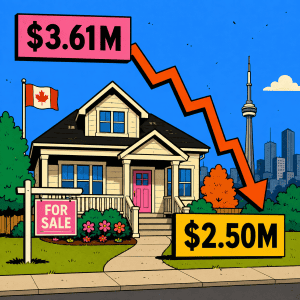
North York Luxury Home: $3.61 Million in 2017, $2.50 Million in 2026
While York Region data show the broader market trend, a recent North York luxury-home transaction demonstrates how large the price difference can be for an individual property.
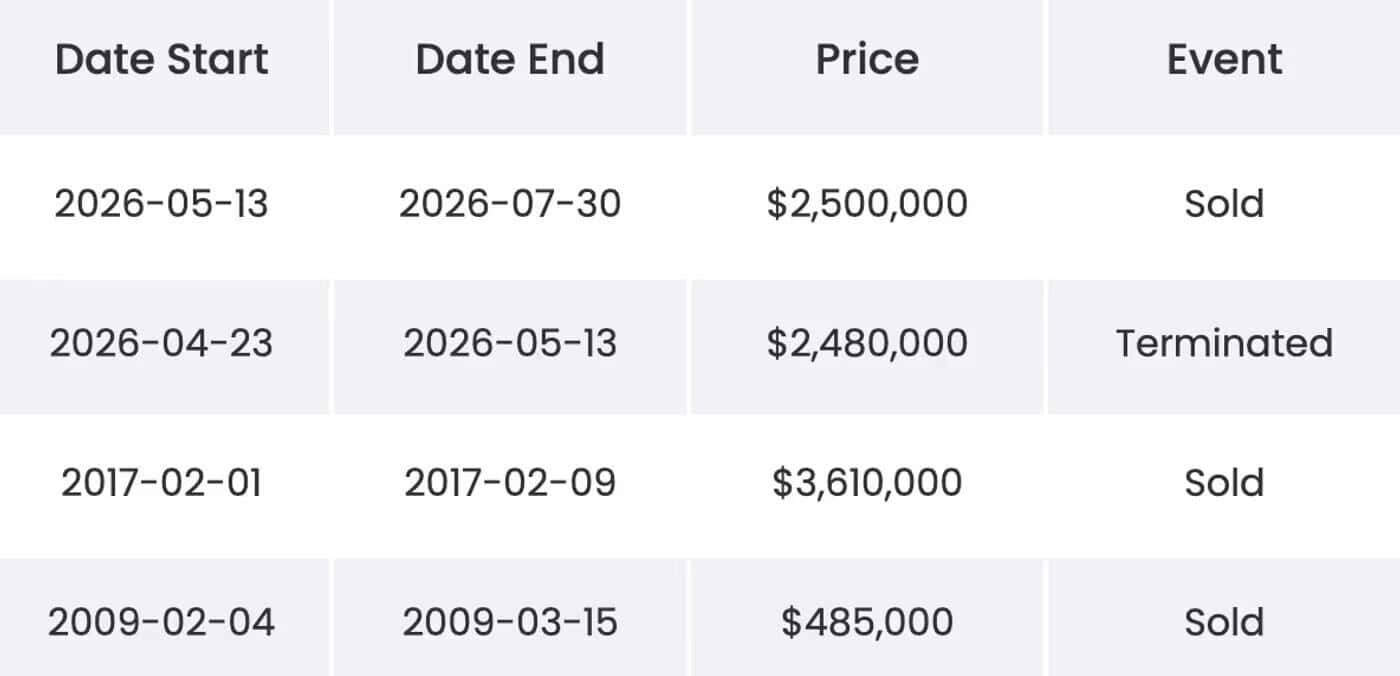
The custom detached home, featuring four bedrooms and five bathrooms, sold for $3.61 million in February 2017.
Roughly nine years later, the property returned to the market.
In April 2026, the seller initially listed it for $2.48 million. After 20 days without a sale, the listing was terminated. One month later, the property returned at $2.88 million and ultimately sold for $2.50 million.
2026 Sale: $2.50M
Loss in Value: $1.11M
Decline: Approximately 31%
This was not an ordinary home lacking premium features.
According to the listing, the property included custom skylights, a gourmet kitchen, home theatre, gym, finished basement, heated floors and a two-level deck.
Ultimately, however, the selling price was determined by what buyers were willing to pay in the current market.
Similar examples have appeared elsewhere this year. A detached home in Mississauga also sold for approximately $1.1 million less than its 2021 purchase price. Properties in Newmarket, Toronto, Caledon and Brampton have also sold hundreds of thousands of dollars below prices paid near the 2022 market peak.
GTA Average Home Price Is Approaching $1 Million Again
The price adjustment is not limited to individual properties or York Region.
TRREB data show that the GTA recorded close to 6,000 resale transactions in July 2026, down 0.9% year over year. New listings fell much faster, declining 17.8% to 14,484.
The MLS Home Price Index composite benchmark fell 4.6% year over year, while the GTA average selling price declined 4.5% to $1,003,956, once again approaching the $1 million level.
At the same time, new listings declined much faster than transactions, tightening the supply-demand balance compared with earlier periods. If that trend continues, buyers may gradually lose some negotiating power.
July's data therefore do not mean prices will necessarily continue falling at the same pace. The market will continue to be influenced by employment, economic growth, inflation, borrowing costs and consumer confidence.
But the price changes that have already occurred provide another perspective on the long-term role of real estate.
AiF Insight
We believe the current Canadian real estate adjustment is still far from over. For investors who already own investment properties, or those currently considering whether to “buy the dip,” it may be worth asking the question again: