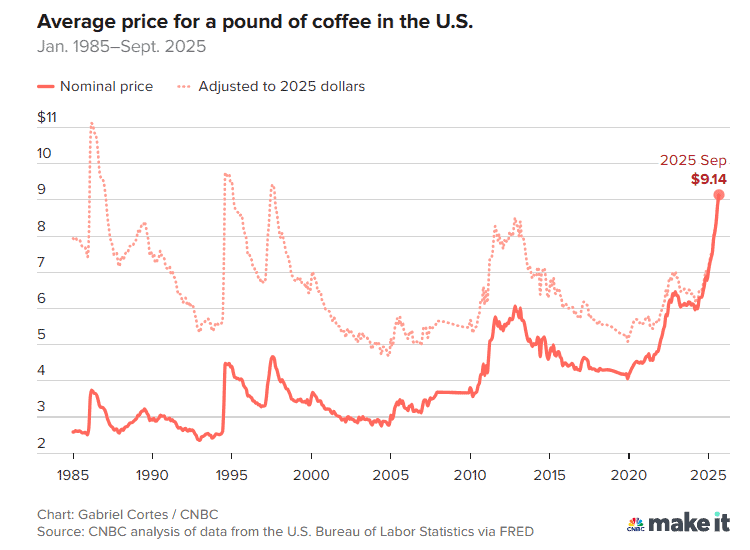
Following poor harvests last year, coffee costs were already trending upward when the U.S. implemented new tariffs on imported coffee in April. Although those duties have since been rescinded, prices at grocery stores and cafes remain elevated, prompting consumer frustration over the rising expense of a simple cup of coffee.
According to the most recent Bureau of Labor Statistics (BLS) data, roasted coffee available in stores was approximately 41% more expensive in September than it was 12 months prior. The average price per pound climbed from $6.47 to $9.14.
While coffee prices often fluctuate by about a dollar within a year during volatile periods, the nearly $3 hike seen in the latest BLS figures is unusually sharp—and shoppers are certainly noticing.
Consumer Sticker Shock
“This is ridiculous,” commented 52-year-old Chuck Smith in a viral TikTok video posted in August. The clip showed receipts for the 38.2-ounce container of Maxwell House ground coffee he purchases at his Indiana Walmart. The price had nearly doubled in less than a year to $21.44.
Smith explained to CNBC Make It that he spontaneously filmed the segment in the grocery aisle upon seeing the price increase, adding that the intense reaction “captured what a lot of folks are feeling.” Other major brands, including Folgers and Nespresso, have also implemented price increases over the past year.
The cost of coffee at restaurants has also edged up: data tracked by menu software company Toast shows the average price of a standard cup rose from $3.46 to $3.57 in the year ending October 2025.
What’s Behind the Unprecedented Price Surge
The sustained and rapid increase in average retail coffee prices has been the most severe since the BLS started tracking these metrics in 1980.
Several key factors contributed to this decades-high spike:
Severe Weather Conditions: Supply issues began with climate problems. Drought and heavy rainfall in 2024 disrupted harvests in major producing regions like Brazil and Vietnam, tightening global supply well before any tariffs were enacted.
Soaring Futures Prices: Coffee futures, which act as the benchmark cost for importers and roasters, climbed dramatically from roughly $2 per pound in May 2024 to a peak of $4 by April 2025. This represents one of the steepest increases the market has experienced in decades, according to Intercontinental Exchange data. Higher futures costs directly translate into elevated wholesale costs, eventually reaching retail shelves.
Tariff Implementation: In April, the U.S. imposed new duties on coffee imports: 10% on several key Latin American growers and about 20% on Asian growers. Brazil was hit hardest with an initial 50% tariff. Since these tariffs took effect, grocery-store coffee prices climbed about 21%.
The Tariff Rollback and Future Price Relief
In mid-November, the White House began rolling back most of the new coffee tariffs, removing duties for nearly all producing countries, though a 40% tariff initially remained on Brazil. Last week, the administration removed the remaining Brazilian duty as well, effectively ending tariffs on imports from virtually all major exporters.
The National Coffee Association (NCA), an industry trade group, noted that retail prices typically lag wholesale costs, so it may take time for the reduction in duties to be reflected on store shelves. Nevertheless, removing the tariffs is expected to relieve some price pressure.
A spokesperson for the NCA told CNBC Make It, “Significant coffee price inflation has occurred during the time tariffs have been in place. Removing tariffs on the world’s leading coffee producing countries is expected to significantly decrease costs.”